Representatives of the European Commission inspected the Petržalka tram and the Krasňany depot
05. 05. 2026
6 minutes read
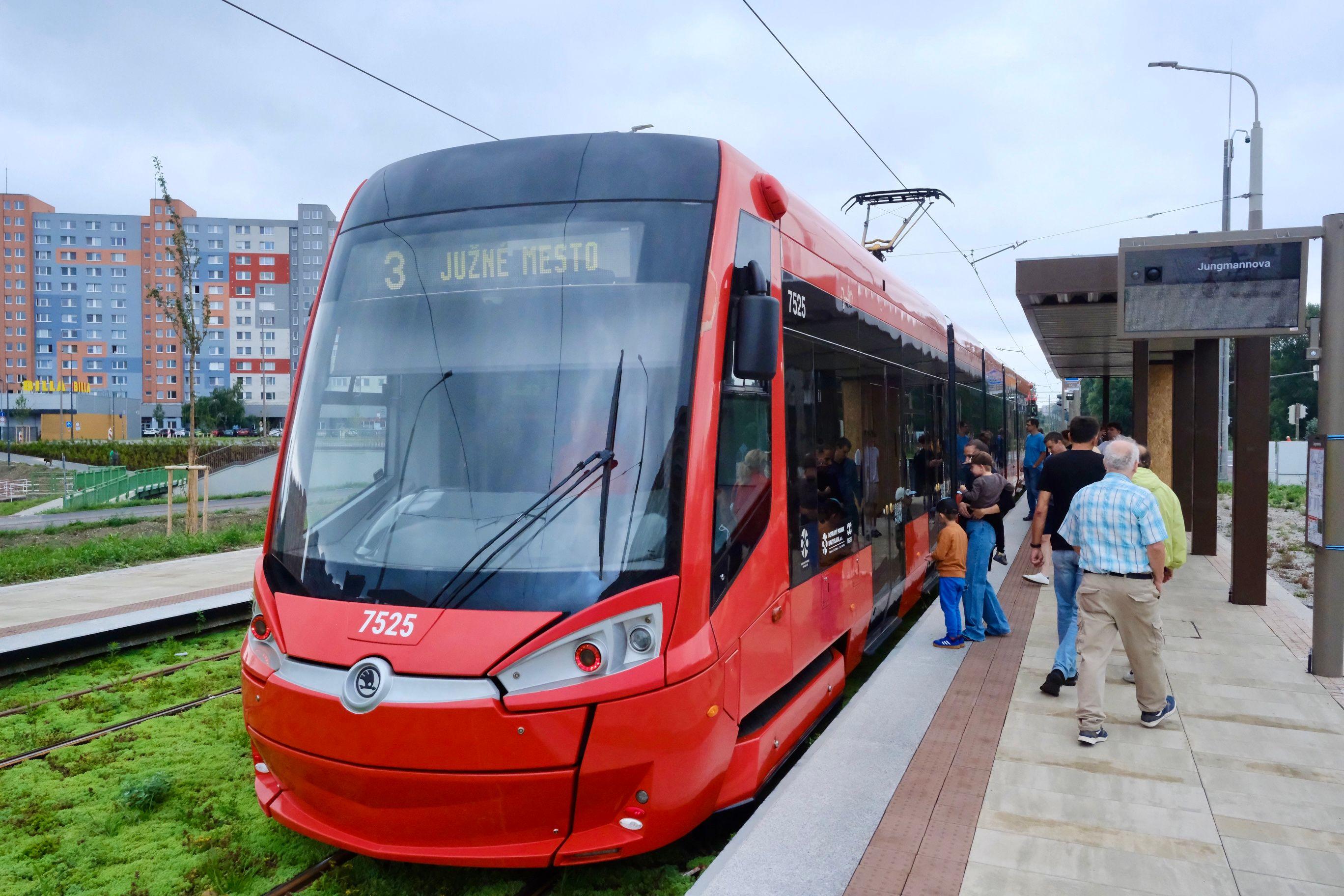
Bratislava, 5 May 2026 – Representatives of the European Commission visited the capital city today, where they inspected projects financed from European sources and the use of non-refundable financial contributions as part of an information day. This related specifically to the Petržalka tram and the Krasňany depot, with the programme also including a tour of the projects directly in the field.
Along with representatives of the European Commission, the information day was also attended by representatives of the capital city of the Slovak Republic Bratislava, the Bratislava Transport Company (DPB), the Ministry of Transport of the Slovak Republic and the Ministry of Investments, Regional Development and Informatization of the Slovak Republic.
The Petržalka tram has improved the connection with the centre
In the course the information day, representatives of the European Commission travelled along the new tram line in Petržalka, visited the daily inspection hall at the terminal in Janíkov dvor and inspected newly built bridges, roads, sidewalks and other infrastructure built as part of this project.
Noted Peter Stano, Head of the European Commission Representation in Slovakia:
“The completion of the tram line in Petržalka is clear evidence of how European investments are improving people’s daily lives in the capital. This project is bringing faster, more modern and more accessible transport to thousands of Bratislava residents. What’s more, investments in ecological public transport are also proof that the European Union is taking concrete steps to improve the quality of life of people in the largest Slovak housing estate. I myself use public transport regularly, and I am therefore glad that the European Union has provided a total of 86 million euros to modernise Bratislava’s infrastructure and support sustainable transport. I believe that the tram will serve citizens for many years to come and will become a symbol of effective European cooperation and solidarity."
As the Deputy Mayor of the capital, Tatiana Kratochvílová, noted: “Carrying out the project enabled us to better connect Petržalka with the Old Town, increase the availability of tram transport and shorten travel time for people commuting to the city centre. At the same time, we are seeing a higher number of passengers, less traffic congestion and a positive impact on the environment. The data clearly shows us that building the tram was a significant step.
The project is part of the Operational Programme Slovakia 2021 to 2027, the aim of which is to improve the quality of public transport by building a line in the Bosákova – Janíkov dvor section. Financing was provided from European Union funds in two phases.
Said the Minister of Transport of the Slovak Republic, Jozef Ráž:
“Thanks to the EU funds managed by the Ministry of Transport, Bratislava is being transformed into a city with more modern, ecological and accessible public transport. We contributed more than 86 million euros to the city for the construction of a new tram line in Petržalka, 73 million of which came from European Union funds and 8.6 million euros from the state budget. We’re convinced that rail transport is the future of urban mobility – this is why we are also financing the modernisation of additional tram lines, the purchase of trams and trolleybuses and the renewal of technical infrastructure. Bratislava has in its hands the tools and support to become a leader in sustainable urban mobility."
Modernisation of the Krasňany depot increases transport reliability
Another project visited by the European Commission representatives was the fully modernised Krasňany depot.
The reconstruction related to all key facilities of the complex. The rail yard for parked rolling stock was expanded; a new track was added, and automated vehicle movement was introduced, which contributes to higher reliability of operation. The project at the same time stresses environmental sustainability – it includes green roofs, rainwater retention, water recycling during vehicle washing and energy-saving technologies that are expected to save up to 42% of operating costs over 30 years.
Said Peter Stano, Head of the European Commission Representation in Slovakia:
“The successful reconstruction of the Krasňany depot of the Bratislava Transport Company is clear proof that investments from the European Union play a key role in modernising transport infrastructure and supporting sustainable mobility. This project shows how European resources can bring concrete results – not only in the form of better technical infrastructure, but also in higher energy and economic efficiency. Thanks to modern technologies and ecological solutions, it will be possible to significantly reduce operating costs in the coming decades, which means more efficient use of public funds. I’m pleased that, through European investments of almost 65 million euros, it has also been possible to move public transport in Bratislava to a level that meets the requirements of the 21st century and improve everyday travel for residents and visitors to the city."
The project was implemented in two phases and included the modernisation of halls, tracks and technological equipment. The capacity and maintenance efficiency were increased, and the project also brought ecological solutions. The reconstruction at the same time improved working conditions and prepared the depot for future expansion of the rolling stock.
Says Martin Rybanský, Chairman of the Board of Directors of DPB:
“The modernised Krasňany depot is a demonstration of what the infrastructure of urban public transport in the 21st century looks like. Thanks to the comprehensive reconstruction, we can service the entire portfolio of trams here while also providing infrastructure for all electric buses. Modern technologies and ecological solutions will save us up to 42% of operating costs over 30 years. This is not only an investment in infrastructure, but above all in our colleagues, who have obtained decent working conditions. I’m proud that this project was successfully implemented, and I want to thank all colleagues and partners who contributed to it. I believe that this beneficial cooperation will continue in other joint projects."
Concluded the Minister of Transport of the Slovak Republic, Jozef Ráž:
“The modern Krasňany depot is a prime example of how EU funds can improve the functioning of public transport directly in practice. This investment from of over 64 million euros from the Ministry of Transport in the technical infrastructure of the Bratislava Transport Company will contribute to more reliable and higher-quality services for passengers, but also to better working conditions for employees. I consider public transport to be the key to the sustainable future of our capital city, which is why we are financing and will continue to finance other projects from EU funds, so that we can have modern, fast and reliable transport."

Did you enjoy this article?
Author
City Hall