Bratislava City Museum to open modern museum that targets young people as part of unique Turning Points project aimed at developing democratic values between Bratislava and Vienna
03. 12. 2025
7 minutes read
Bratislava, Vienna, 3 December 2025 – Múzeum mesta Bratislavy [Bratislava City Museum (MMB)] and the Volkskundemuseum Wien [Austrian Museum of Folk Life and Folk Art Vienna (VKM)] are initiating an extensive project called Turning Points – Museums for a Democratic Future, which has obtained support in the total amount of 2.84 million euros from the Interreg Slovakia – Austria programme co-financed by the European Union. As part of the project, a new branch of the Bratislava City Museum will be established, and a historical bunker managed by the Volkskundemuseum in Vienna will be revitalised. The project will strengthen cross-border cooperation between the museums, bring joint research into the most recent history and create new educational programmes for the young generation.
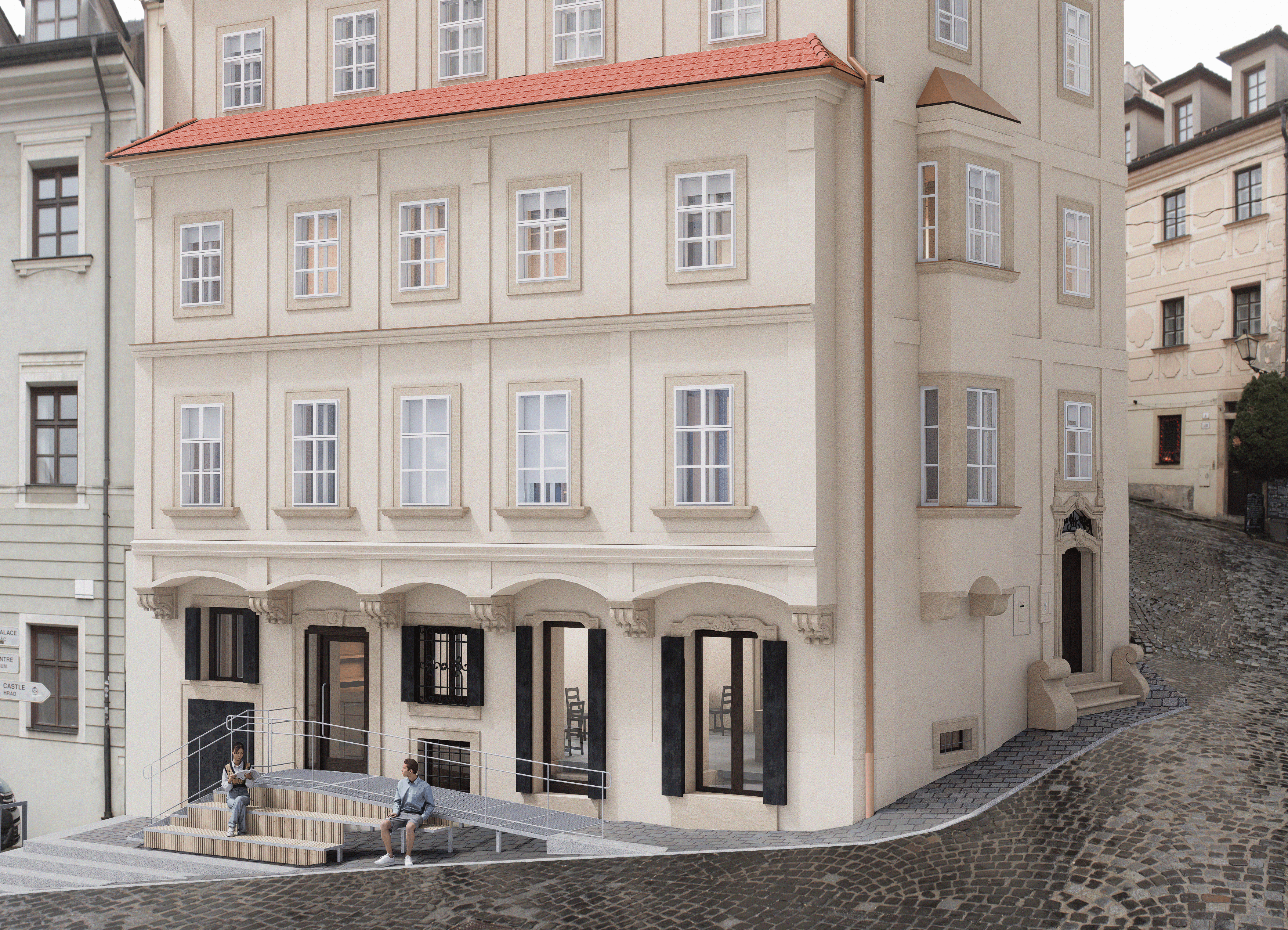
One of the main outputs of the Turning Points project in Slovakia will be the opening of a new branch of the Bratislava City Museum focusing on the history of the 20th and 21st centuries. With this goal in mind, the MMB will fully restore the burgher house at Beblavého 1, which has been closed to the public for a long time. The museum will also build a modern digitised workplace, develop a digitisation methodology and start making the collection available to the general public.
Said Matúš Vallo, the Mayor of Bratislava:
“Turning Points is a project that represents an investment in our common future. I’m glad that Bratislava is a partner in it, and that together with Vienna we are creating a modern educational environment supporting dialogue across generations. We need institutions where young people learn to understand how the major events of recent decades shape our lives and the values on which democratic society is based."
In the new branch, the MMB wants to contribute to the development of civil society and create critical awareness of the dangers of totalitarian regimes, namely through research and digitisation of cultural heritage.
Said Zuzana Palicová, Director of the Bratislava City Museum:
“Survey data shows that the younger generation is often unaware of the major events of the last decades, and this is exactly what we want to change through the Turning Points project and the new museum devoted to the most recent history. Through personal stories, contemporary artistic interventions and interactive forms of learning, we will offer space for the development of critical thinking and a better understanding of historical contexts. We believe that the new museum will become a living laboratory that supports dialogue and understanding and contributes to increasing the resilience of democracy."
The Volkskundemuseum in Vienna is preparing a partial restoration of a former civilian air raid shelter in Schönbornpark as part of the project. It will gradually be transformed into a new public space for education and organising events.
The MMB and VKM have launched a joint project with the aim of exploring the turning points in the most recent history of Bratislava and Vienna in the 20th and 21st centuries which have significantly shaped the appearance of both cities.
Said VKM director Matthias Beitl:
“The fact that two museums in Bratislava and Vienna are joining forces in order to jointly explore and open a discussion about these most significant moments in recent history has a clear reason: the Iron Curtain fell 36 years ago and now represents the distant past for an entire generation. At the same time, the idea of a united Europe is coming under pressure from new nationalisms and authoritarian tendencies."
Added M. Beitl:
“With the Turning Points project, we will approach these historical and current contexts from multiple perspectives, and we want to contribute to strengthening democratic, open and multi-layered processes. The question of why societies are now again leaning towards authoritarian models is at the centre of our interest."
Main activities of the Turning Points project:
- Opening a new branch of the Bratislava City Museum focused on the most recent history in a renovated building at Beblavého 1, completing the infrastructure and developing a high-quality cultural offer in the centres of Vienna and Bratislava for domestic and foreign visitors.
- Education – new programmes will be created for secondary schools in Bratislava and Vienna focused on supporting historical literacy and critical thinking in the context of democracy. The museums want to introduce young people to how recent historical events shape today, and why it is important to understand its connections.
- Joint research – the project will enable close cooperation between the Volkskundemuseum in Vienna and the Bratislava City Museum, which will combine their expertise and together examine the stories and events that have influenced the identity of the region most significantly. The joint research team will focus on the period of transformation, the experiences of the population in times of crises, as well as long-term social processes with the aim of using the knowledge gained in a new exhibition and educational programmes.
Says Jana Jablonická Zezulová, a researcher of recent history at the MMB:
“We’re looking for stories that show how people have been able to respond to the pressure of history – whether they have resisted, adapted or created small islands of freedom. These are stories of both strength and fragility at the same time. We believe that a society that understands these experiences can better respond to the challenges of the present."
- Supplementing the collections, especially with objects, documents and personal stories from the period after 1985, which are missing in museums. The aim is to fill gaps in collective memory and create space for a more comprehensive understanding of social changes.
- Digitisation of the MMB collection fund and creating a new online publication platform will make the collections, objects and historical documents accessible to the general public for research and public purposes in an easily accessible and attractive way.
The project will also draw on a strategic partnership with four renowned institutions: the Capital city of the Slovak Republic, Bratislava – Department of Education and Youth, the Bratislava Tourist Board, the Institute of National Remembrance and Österreichische Mediathek in Austria, all united by the ambition to build an informed and democratic society that understands its past and will be more resilient to the challenges of the future.
Project Summary
Name: Turning Points – Museums for a Democratic Future
Main partners: Múzeum mesta Bratislavy (Bratislava City Museum, Volkskundemuseum Wien (Austrian Museum of Folk Life and Folk Art Vienna)
Strategic partners: Capital City of the Slovak Republic, Bratislava Tourist Board, Österreichische Mediathek, Institute of National Memory
Total budget: 2,840,895.21 €
MMB budget: 2,109,637 €
Co-financing from the Interreg Slovakia – Austria programme: 2,272,716.17 €
Duration: 1 December 2025 – 31 July 2028
Objectives: reconstruction of infrastructure, joint research, supplementing of collections, capacity building and development of cooperation, digitisation of cultural heritage, education about democracy.
About the MMB:
Múzeum mesta Bratislavy (the Bratislava City Museum) is the oldest continuously operating museum in Slovakia with more than 155 years of tradition (since 1868). With regard to its focus, it manages an exceptionally differentiated and broadly structured collection fund containing more than 120 thousand objects. These consist of historical, archaeological, art-historical and ethnographic artifacts that document the history of the city of Bratislava, the functioning and development of crafts, industry, viticulture, city administration and forms of its cultural and social life. Aside from its thematic permanent exhibitions, the museum also manages the national cultural monument Devín Castle, which is one of the most visited castles in Slovakia, and the Antická Gerulata site in Rusovce, which due to its significance was inscribed on the UNESCO World Cultural Heritage List in 2021. The collection fund also includes a valuable set of literary collections that make up the estate of Janek Jesenský. The Bratislava City Museum is developing as a modern cultural and memory institution that is a source of knowledge about the history of Bratislava, a place of dialogue between the past and the present, but also with the city's residents. It sensitively perceives its role in defining and reflecting the city's identity or building a space for social inclusion and the spending of free time, which will be repeatedly interesting for the domestic audience. The MMB wants to be an active part of what is happening in the city and to convey its themes and contents through contemporary forms of communication and programmes.
About the VKM: